
Introduction
Prostate enlargement is one of the most common health changes men experience after 40.
Yet most men don’t really understand what it is, why it happens, or what actually influences it.
They only notice the surface signs:
- waking up more often at night
- slower urine flow
- pressure or discomfort
- changes in bladder habits
This guide is designed to explain prostate enlargement in a simple, non-alarming way — so you can understand what’s happening inside the body and why it becomes more common with age.
What Is the Prostate and What Does It Do?
The prostate is a small gland located just below the bladder, surrounding the urethra (the tube urine flows through).
Its main roles include:
- supporting normal male reproductive fluid
- helping regulate urinary flow
- interacting with hormonal and cellular systems
In younger men, the prostate is usually stable and quiet.
Over time, internal conditions can change how this small gland behaves.
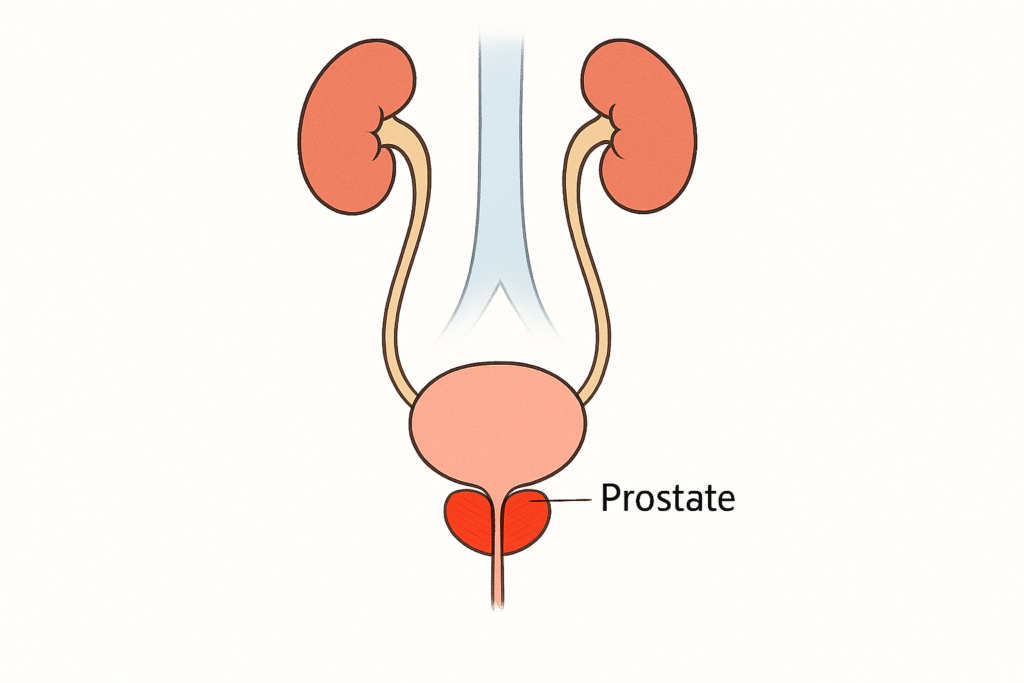
What Does “Prostate Enlargement” Actually Mean?
Prostate enlargement refers to a gradual increase in prostate tissue volume or sensitivity.
It does not happen overnight.
It develops slowly as a result of:
- hormonal signaling changes
- cellular aging processes
- inflammatory activity
- metabolic and circulation shifts
As prostate tissue changes, it can begin to place pressure on the urinary channel or disrupt bladder signaling.
This is why urinary changes are often the first noticeable signs.
Common Early Signs Men Notice
Many men first experience prostate changes as subtle inconveniences, such as:
- waking up at night to urinate
- reduced flow strength
- feeling like the bladder doesn’t fully empty
- increased urgency
- longer bathroom time
Because these changes develop gradually, they are often dismissed as “just aging.”
In reality, they reflect underlying internal shifts that can be influenced.
👉 (Internal link: Post #1 – night urination article)
Why Prostate Changes Become More Common After 40
Age itself is not the direct cause.
Age creates the internal environment where deeper processes become more visible.
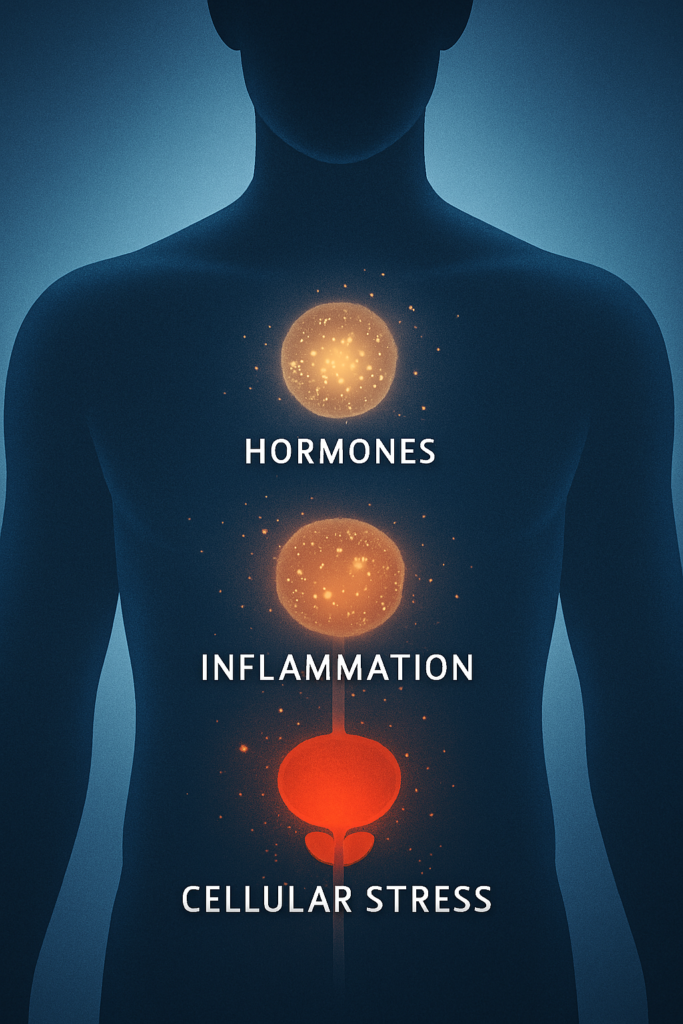
Key influences researchers often study include:
• Hormonal signaling shifts
Testosterone, DHT, and related pathways change how prostate cells behave over time.
• Inflammatory environment
Low-grade inflammation can influence tissue behavior and sensitivity.
• Cellular stress and oxidation
Long-term metabolic stress affects how cells repair and regulate themselves.
• Circulation and nutrient delivery
Reduced microcirculation affects tissue resilience.
These factors don’t act alone. They interact.
That interaction is what gradually changes prostate behavior.
Why Symptoms Often Appear First at Night
Nighttime is usually when prostate-related signals become more noticeable.
This happens because:
- the body is horizontal
- the nervous system is quieter
- fluid redistribution changes bladder signaling
- there are fewer distractions
Small internal signals that go unnoticed during the day become obvious at night.
That is why waking up to urinate is one of the most common early experiences men report.
👉 (Internal link: Post #1)
Why Surface-Level Approaches Often Fall Short
Most men respond by focusing only on stopping the symptom.
But symptoms are the final expression of longer internal processes.
Without addressing:
- inflammatory environment
- metabolic stress
- tissue support
- and daily internal balance
the underlying cycle often continues.
This is why many modern health strategies now focus on supporting prostate health at a system level rather than reacting only when discomfort appears.
The Modern Prostate Health Perspective
Today, many prostate support approaches are built around helping the body maintain healthier internal conditions.
These often include:
- nutritional support concepts
- plant-based compounds studied for prostate tissue
- daily routines that improve circulation and metabolism
- lifestyle habits that reduce internal stress
Rather than forcing changes, the goal is to support normal function.
👉 (Internal link: Post #7 – daily habits)
👉 (Internal link: Post #8 – natural compounds)

Why Understanding Comes Before Choosing Solutions
Not all men experience prostate changes the same way.
And not all solutions fit every man.
Understanding:
- what prostate enlargement really is
- why it develops
- and what influences it
allows men to make informed, calm, long-term decisions rather than reacting out of frustration.
This is also why many men today research both:
- lifestyle-based approaches
- and targeted prostate support solutions
before choosing any specific path.
👉 (Internal link: Post #9 – best prostate supplements – future)
👉 (Internal link: Post #2 – presell discovery article)
Frequently Asked Questions
Is prostate enlargement dangerous?
Prostate changes are common as men age. Understanding them early allows better long-term management choices.
Can lifestyle influence prostate health?
Research increasingly links prostate behavior with inflammation, metabolic health, circulation, and hormonal signaling.
Is this only an issue for older men?
While more common after 40, internal processes often begin earlier.
Why do some men experience symptoms and others don’t?
Because internal environments differ — lifestyle, metabolic health, stress, and genetics all influence how prostate tissue behaves.

Final Thoughts
Prostate enlargement is not a sudden event.
It is a gradual shift influenced by how the internal environment changes over time.
Understanding this allows men to move from worry to clarity — and from reaction to long-term strategy.
When men understand what is happening, they stop guessing.
They start supporting their health with intention.
This content is for educational purposes only and does not provide medical advice.
Health responses vary between individuals. Always take personal responsibility for your health decisions.


Leave a Reply